
Business Mentoring Glasgow: 7 Mistakes New Founders Make (and How to Fix Them)

Starting a business can give you greater control over your time, income and future. It can also feel overwhelming, particularly during your first year when every decision seems important.
Many new founders in Glasgow and across Scotland make similar mistakes. These mistakes are rarely caused by a lack of ambition. More often, they happen because you are moving quickly without enough structure, feedback or practical support.
The good news is that each mistake can be corrected.
Whether you are developing a business idea alongside your 9-to-5, launching your first company or trying to improve an early-stage business, the right guidance can help you move from uncertainty to clarity. This is where one-to-one business mentoring with Freedom Income can save you time, reduce avoidable errors and help you build stronger foundations.
Although this guide focuses on business mentoring Glasgow, the lessons apply equally to founders in Edinburgh, Dundee, London and those building businesses for an international market.
Mistake 1: Building an idea before checking the market
It is easy to become excited about your business idea. You may believe in the product or service, spend money on branding and create a website before speaking to enough potential customers.
However, enthusiasm is not the same as demand.
A business becomes stronger when you understand who you are helping, what problem you are solving and why someone would choose to pay you.
How to fix it
Before investing heavily, speak directly with potential customers and ask practical questions:
- Identify the problem: What frustrates your potential customer most?
- Test the demand: Would they pay for a solution, and what would they expect it to cost?
- Study competitors: What already exists, and how could you offer a clearer or more useful alternative?
- Run a small test: Start with a simple service, sample, consultation or pre-launch offer.
You do not need perfect research before beginning. You need enough evidence to make more confident decisions.
A business mentor can challenge your assumptions without dismissing your ambition. This gives you a clearer view of what deserves your time and investment.

Mistake 2: Treating a business plan as a one-off document
Some founders write a business plan only because a bank, investor or funding provider asks for one. Once it has been completed, it is placed in a folder and forgotten.
That approach removes much of its value.
Your business plan should help you understand how your business will attract customers, generate income, manage costs and develop over time. It does not need to be complicated, but it does need to be realistic.
How to fix it
Build a practical first-year plan that includes:
- Your main objective: Define what you want to achieve within the next 12 months.
- Your customer strategy: Explain how people will discover, trust and buy from you.
- Your income targets: Set realistic monthly and quarterly revenue goals.
- Your key costs: Include software, professional fees, marketing, equipment, stock, travel and tax.
- Your next actions: Break larger goals into weekly tasks that you can actually complete.
Review your plan every month. Your assumptions will change as you learn more, and updating the plan helps you remain focused rather than reacting to every new idea.
Mistake 3: Confusing sales with profit
Revenue can look encouraging while your business is still losing money.
New founders sometimes celebrate every sale without calculating the true cost of delivering the product or service. They may also underprice their work because they are worried about losing customers.
This creates pressure and makes it difficult to pay yourself consistently.
How to fix it
Understand the numbers behind every sale:
- Calculate your direct costs: Know what it costs to produce or deliver what you sell.
- Track your gross margin: This shows how much remains after direct costs.
- Include your time: Your working hours have value, even when you are not paying yourself yet.
- Review your pricing: Price should reflect the value you provide, not simply what feels comfortable.
- Set a break-even target: Know how much you need to sell before the business covers its costs.
You do not need to become an accountant to improve your financial awareness. You need a simple system, regular reviews and the confidence to ask for help when the numbers are unclear.
Mistake 4: Neglecting cash flow
A profitable business can still experience cash-flow problems. This happens when money comes in too slowly, expenses are due too quickly or customers take too long to pay.
Overspending at the beginning is another common issue. New founders may commit to expensive offices, equipment, software subscriptions or advertising before they have confirmed consistent demand.
How to fix it
Create a rolling cash-flow forecast and update it regularly.
Your forecast should show:
- Money coming in: Include expected sales and the dates payments should arrive.
- Money going out: Record fixed and variable costs.
- Tax commitments: Set money aside rather than treating it as available income.
- A cash reserve: Build a buffer for quieter periods or unexpected costs.
- Spending priorities: Invest first in activities that support customers and revenue.
Separate personal and business finances from the beginning. This makes your results easier to understand and creates a more professional foundation as your business grows.
Mistake 5: Trying to serve everyone
When you are starting out, it can feel risky to focus on a particular audience. You may believe that a wider market means more opportunities.
In practice, unclear positioning often makes your marketing weaker. If your message is aimed at everyone, it may connect with no one strongly enough.
How to fix it
Choose a clear starting customer and understand their needs.
Ask yourself:
- Who benefits most from what I offer?
- What situation are they currently facing?
- What language would they use to describe the problem?
- Why would they choose my business instead of another option?
- What result can I help them achieve?
Your focus can develop over time. You are not permanently restricting your business. You are creating a clearer route into the market.
This is one of the areas where tailored business mentoring in Glasgow can be especially valuable. A mentor can help you identify where your experience, interests and commercial opportunity overlap.
Mistake 6: Spending too much time working in the business
During your first year, you may need to handle sales, marketing, operations, customer service and administration yourself. That is normal.
The problem begins when every task feels equally important and you never step back to improve the business.
You can become busy without becoming more profitable.
How to fix it
Create simple weekly structures:
- Set three priorities: Choose the actions most likely to improve customers, cash flow or delivery.
- Block time for growth: Protect time for marketing, partnerships and strategic planning.
- Document repeatable tasks: Write down how important processes are completed.
- Use appropriate tools: Automate or simplify low-value administration where possible.
- Review your role: Identify tasks that someone else could eventually complete.
Delegation does not need to happen all at once. Start by understanding which activities require your personal input and which can be systemised as the business develops.

Mistake 7: Waiting too long to seek experienced support
Many founders try to solve every problem alone. You may worry that asking for help makes you look inexperienced, or you may believe that mentoring is only for larger companies.
In reality, support is often most useful at the beginning, before small problems become expensive ones.
An experienced mentor can help you see blind spots, test your thinking and turn broad ambitions into practical next steps.
How to fix it
Build a support structure that matches your circumstances:
- Find honest feedback: Speak with people who will challenge your assumptions constructively.
- Use specialist advice: Contact qualified professionals for legal, accounting or tax matters.
- Create accountability: Set clear actions and review whether you completed them.
- Learn from relevant experience: Look for guidance from someone who understands the type of decisions you face.
- Keep ownership of decisions: Use mentoring to build your confidence and capability, not to hand over responsibility.
At Freedom Income, one-to-one business mentoring is personalised around your goals, experience and current situation. Sessions can help you clarify a business idea, improve an existing operation, identify opportunities and create a practical roadmap towards greater income and independence.
Why one-to-one business mentoring can accelerate your progress
Generic advice can be useful, but your business is not generic. Your available time, finances, skills, responsibilities and ambitions are different from those of another founder.
One-to-one mentoring gives you space to discuss your actual situation and focus on decisions that matter now.
You can gain support with:
- Business ideas: Turning an early concept into a structured opportunity.
- Planning: Building realistic goals, priorities and milestones.
- Marketing: Finding practical ways to attract and retain customers.
- Growth: Identifying opportunities without scaling too early.
- Confidence: Making decisions with clearer information and stronger accountability.
- Income planning: Exploring additional income beyond your traditional employment.
Freedom Income is based in Edinburgh and supports clients in Glasgow remotely across the UK. The approach is practical, supportive and focused on helping you develop the knowledge and confidence to make better decisions for yourself.
The founder, Magic Yin, has hands-on experience building businesses, investing in property and trading financial markets. That experience informs a mentoring style centred on preparation, sustainable progress and a realistic view of risk.
Start with a clearer next step
You do not need to have everything worked out before asking for support. You can begin with a business idea, a difficult decision or a question you keep postponing.
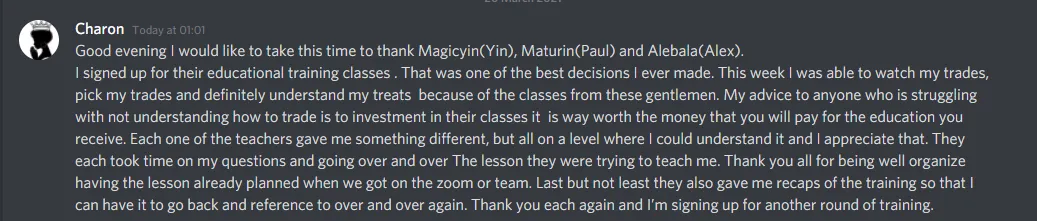
The Freedom Income testimonials include feedback from clients who valued the friendly guidance, practical explanations and ongoing encouragement they received.
You can also explore the company’s about page to understand the experience and approach behind the mentoring.
If you are looking for business mentoring in Glasgow, the next step can be simple: book a free strategy call and talk through where you are, what you want to build and which decision deserves your attention first.
You do not need a perfect plan to begin. With the right support, you can replace confusion with clarity, avoid unnecessary mistakes and move forward with greater confidence.
Freedom Income mentoring is educational and does not constitute personal financial, legal, tax or investment advice. Business outcomes vary according to individual circumstances, decisions and market conditions. Seek suitably qualified independent professional advice where appropriate.